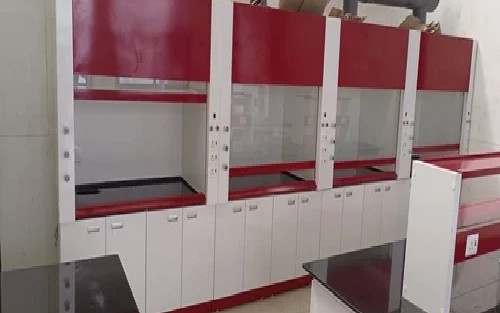
A laboratory fume hood is a ventilated enclosure that removes harmful fumes, vapors, and dust from a workspace to protect lab personnel. It contains hazardous substances and exhausts them outside the building, preventing them from entering the lab atmosphere. Key features include a sliding sash for protection and visibility, and internal baffles to direct airflow.
Function and purpose
Protects personnel: Creates a safe workspace by capturing and removing toxic or hazardous airborne particles, preventing inhalation.
Contains hazards: Serves as a physical barrier against chemical reactions, fires, or explosions and is used for messy experiments.
Exhausts contaminants: An internal exhaust fan pulls air through ductwork, venting harmful gases, vapors, and dust to the atmosphere.
Maintains negative pressure: Keeps a negative pressure to ensure air flows inward, preventing contaminants from escaping the enclosure.
Key components
Enclosure: A workspace enclosed on the top, sides, and back.
Sash: A clear glass window that slides up and down to provide visibility and act as a physical barrier.
Exhaust fan: A fan, often on the roof, that pulls contaminated air out of the hood and vent system.
Baffles: Internal panels with adjustable slots that direct airflow to ensure consistent and efficient removal of contaminants.
Airfoil: A beveled frame around the hood face that allows for even air entry and reduces turbulence.
Important considerations
Airflow monitoring: It's crucial to monitor the airflow to ensure the hood is working correctly, as a poor airflow can affect its efficiency.
Proper usage: Avoid blocking baffles with equipment or materials, as this can disrupt airflow and reduce the hood's effectiveness.
Maintenance: Regular inspection and maintenance are critical for ensuring maximum performance and worker safety.