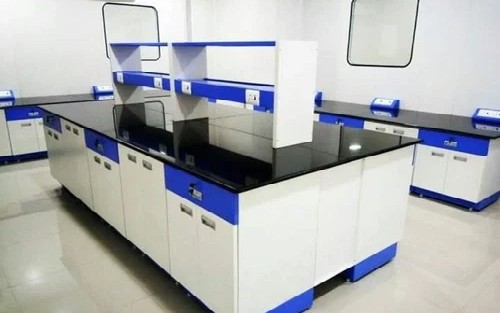
A laboratory desk, or workbench, is a specialized and durable piece of furniture designed for scientific work, featuring a robust and chemical-resistant worktop, built-in storage like cabinets and drawers, and often integrated features such as sinks, faucets, and power outlets. These desks are constructed to be rugged, modular, and adaptable to specific lab needs, with some including specialized elements like fume hoods for ventilation, vibration isolation, and safety features.
Key features of laboratory desks
Durable and chemical-resistant surfaces: The worktops are made from materials like granite, phenolic resin, or other chemically resistant materials to withstand spills and harsh conditions.
Storage: They often include integrated drawers, cabinets, and shelving to keep equipment, chemicals, and other supplies organized and accessible.
Utility connections: Laboratory desks are typically equipped with built-in features for utilities, such as electrical outlets, and many include integrated sinks and faucets for running water.
Modular and customizable design: Many desks are modular, allowing for customization with options like reagent racks, special lighting, and different workstation configurations to suit specific tasks.
Safety features: They are designed with safety in mind, incorporating features like smooth, rounded edges, anti-skid legs, and options for splash guards or integrated fume hoods to protect users from hazards.
Ergonomic design: Many modern desks are ergonomically designed with adjustable heights to promote proper posture and reduce strain during long periods of work.
Specialized options: Depending on the field, desks may include specialized features like ESD-protected surfaces for electronics, integrated power management systems, or vibration isolation tables for sensitive experiments.