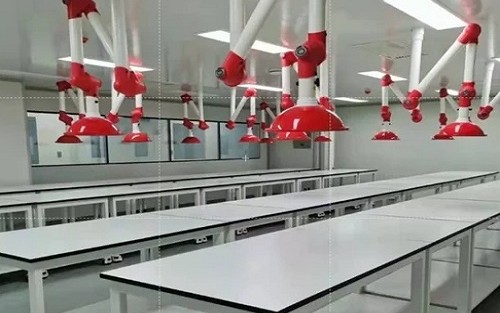
A laboratory fume extractor is a ventilation device that captures and removes hazardous fumes, gases, vapors, and airborne contaminants from a lab's atmosphere to protect researchers from inhalation and ensure a safe working environment. It works by pulling contaminated air from the source using a powerful suction system and filtering it before expelling it. Key features include multi-stage filtration (pre-filter, HEPA, and activated carbon filters), adjustable and flexible extraction arms, and various mounting configurations like benchtop or wall-mounted.
Function and purpose
Pollutant capture: Captures and contains hazardous substances like chemical vapors, solvents, and fine particulates at the point where they are generated.
Source control: Prevents the spread of pollutants throughout the lab by drawing them into the ventilation system.
Safety compliance: Helps laboratories maintain compliance with safety regulations and air quality standards, such as those from OSHA, EPA, and CE.
Key components and features
Filtration system: Employs a multi-stage filtration process:
Pre-filter: Catches large particles.
HEPA filter: Captures very fine particulates, often up to 99.97% of particles 0.3 microns and larger.
Activated carbon filter: Absorbs chemical fumes, Volatile Organic Compounds (VOCs), and odors.
Extraction arm: A flexible, adjustable arm with a hood or nozzle that can be precisely positioned to capture fumes at their source. They are often 360-degree rotatable.
Blower/Fan: A powerful fan or blower creates the suction needed to pull air through the system. Noise-reducing designs are common.
Configuration: Can be installed as a wall-mounted unit, a benchtop model, or a ceiling-mounted system, with some models being portable.
Additional features
Airflow measurement: Many modern units include an airflow meter to ensure the hood is working effectively.
Service fixtures: Some units can include integrated fixtures for gas, water, and electricity.
Variable air volume (VAV): Some advanced models adjust the exhaust flow to maintain a constant face velocity, even as the sash is moved.
Low noise operation: Features that reduce operating noise for a more comfortable laboratory environment.