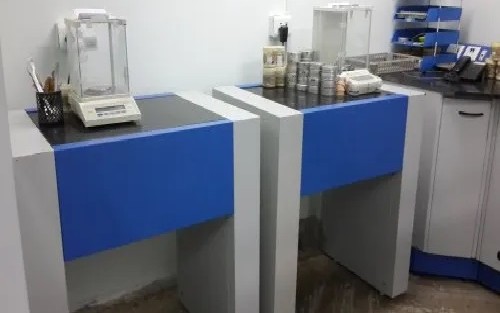
An anti-vibration table is a specialized workbench designed to isolate sensitive equipment from floor and machinery vibrations to ensure stable and accurate measurements. It typically features a heavy, vibration-damping top (often a polished granite slab) supported by anti-vibration pads or mounts, which absorb shocks and prevent them from affecting the equipment placed on it. These tables are essential in environments with high-precision instruments like analytical balances, microscopes, and spectrophotometers.
Key features and components
Vibration damping mechanism: The core function is achieved by using materials and designs that absorb and dissipate vibrations. This often involves a double-table structure with an internal working surface made of heavy materials like granite, supported by a separate external frame.
Shock-absorbing pads: Special rubber pads or pneumatic mounts are placed between the internal working surface and the outer frame to absorb vibrations and prevent them from reaching the equipment.
Heavy construction: The tables are built to be very heavy and rigid to provide maximum stability. The internal working surface is often a thick, solid granite slab.
Leveling system: Most tables include leveling feet to ensure the surface is perfectly horizontal, which is critical for accurate measurements.
Durable and easy-to-clean surfaces: Work surfaces are often made from materials like polished granite, which is resistant to chemicals, scratches, and is easy to clean.
Applications
Laboratories: Used for high-precision instruments like analytical balances, microscopes, spectrometers, and galvanometers.
Manufacturing: Provides a stable platform in environments where heavy machinery might cause vibrations that affect production or testing equipment.
Medical research: Used for delicate operations in fields like IVF (In Vitro Fertilization) to ensure stability during procedures like ICSI (intracytoplasmic sperm injection).