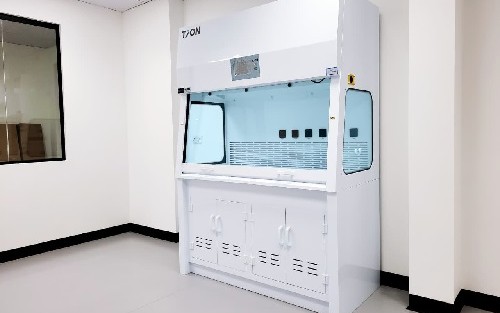
A fume hood is a ventilated enclosure designed to capture and remove harmful fumes, vapors, and dust from a laboratory's workspace, protecting personnel from exposure. It works by using an exhaust fan to pull contaminated air through internal ductwork, which then vents it outside the building. Key components include a transparent, movable front window called a sash for protection, baffles at the back to direct airflow, and sometimes a work surface with a sink for convenience.
Description and purpose
Ventilated enclosure: A fume hood is essentially a box with an open front, designed to contain a work area where hazardous chemicals are handled.
Personnel protection: Its primary purpose is to act as a shield between the user and potentially toxic substances, preventing them from entering the breathing space of the lab.
Air and vapor removal: It removes a variety of airborne contaminants, such as gases, vapors, mists, fumes, and dust.
Local exhaust ventilation: It is a local exhaust ventilation device that removes contaminants directly at the source.
Key components
Sash: A transparent, movable window, typically made of tempered glass, that protects the user while allowing access to the work area.
Baffles: Panels located at the back of the hood that help manage and direct airflow, ensuring it moves efficiently away from the user.
Airfoil: An aerodynamic component at the bottom of the opening that allows air to enter smoothly, even when the sash is partially closed.
Exhaust fan: An external or top-mounted fan that draws air from inside the hood and pushes it through ductwork to the outside.
Work surface: Some models include a built-in sink for convenience when working with liquids.
How it works
A user works inside the hood, and the fan draws air in from the front opening.
The air is pulled over the work surface, capturing fumes and other airborne particles.
The contaminated air passes through internal ductwork and is exhausted to the outside.
This creates a one-way flow of air that prevents the fumes from escaping back into the laboratory environment.
Common features and types
Bench-top: These are smaller hoods placed on a laboratory benchtop or above a storage cabinet.
Constant volume vs. Variable air volume (VAV): In a constant volume system, the exhaust flow rate remains the same, while in a VAV system, the airflow rate changes as the sash is moved to maintain a constant face velocity.
Integrated services: Many hoods come with integrated services like water, gas, and electrical outlets for user convenience.